SaaS MVP Development: How to Build Your First Product Without Wasting Capital
Many founders take early validation and overbuild. Six months and $40,000 later, they have an MVP packed with 12 features, yet not a single user is paying. They had proof that demand existed. What they lacked was discipline in execution.
If you have that proof—letters of intent signed, smoke tests converting, real interest confirmed—this article is for you. At SMELighthouse, we help founders turn proven demand into disciplined execution. Instead of adding features, we focus on building one core function that delivers clear value, then study how users actually behave and expand only where the data supports it.
This is how we scale from proof without burning capital.
What a SaaS MVP Actually Is
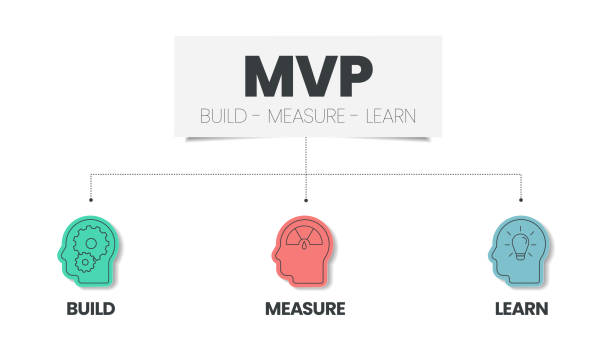
An MVP is not a rough draft. It is not a minimum product you slap together to launch fast. It is a validated learning vehicle that answers a specific question: will users pay for this solution?
If your MVP does not generate that answer, you’ve built an experiment without a hypothesis.
The SMELighthouse MVP Framework
Our process is broken into four stages. Each one exists to protect capital while increasing certainty.
Stage One: Scope Lock
Scope lock means starting with one core user action and refusing to expand until real market behavior justifies it.
We decide that single action using the same 5-Question Problem Drill from our validation process: what job the user is trying to get done, how they solve it today, what happens if it remains unsolved, who else is affected, and whether they would pay to remove the problem. If you haven’t worked through that exercise yet, start with our guide on validating before building. It prevents you from solving the wrong problem with precision.
Founders who have spent 10 or 15 years in an industry naturally want to build everything they know is broken. But the market does not reward completeness at the beginning. It rewards clarity. We often remind them that the sooner something real is in users’ hands, the sooner you learn what actually matters to the users.
We worked with a founder who wanted to build a 12-feature compliance dashboard after 18 years in risk management. We reduced the MVP to one workflow: generate a compliance report in three clicks. In user testing with the right ICP, 85% completed the workflow successfully and several asked about early pricing, which was enough signal to proceed.
Scope lock ensures that expansion follows evidence. And going through the process with a team like ours that’s validated 200+ MVPs means you pivot faster and spend less.
Stage Two: Rapid Design and Validation
Once scope is locked, we move into rapid design and validation. We create interactive mockups so real users experience the core workflow before any production build. The goal at this stage is to test behavior before committing capital.
AI has fundamentally changed the economics of this stage. What used to cost $15,000 and six weeks of custom design can now be done in days with AI-generated mockups. We can test five versions of a workflow for less than the cost of one traditional prototype. That means founders no longer have to choose between speed and certainty. They can afford both.
Because testing is now faster and cheaper, we focus entirely on how users behave inside the workflow. Users either complete the core task or they struggle. We measure completion rate and identify friction points. Below 60% completion means the workflow is wrong and we pivot before development begins. Above that threshold gives us confidence to proceed.
But completion rate alone is not enough. Signal quality matters. We test with users who closely match the true ICP, not broad, unqualified traffic. A small, focused group of the right users will always generate clearer insight than a large group of the wrong ones.
Stage Three: Build and Iterate
With validated design, we build in 2-week sprints with founder feedback loops every 14 days.
The build method depends on the founder’s long-term intent, not just short-term speed.
- No-code works when you have proven demand and the workflow is straightforward. It allows you to launch quickly without engineering overhead.
- Custom development makes sense when the MVP must evolve into a long-term platform with complex logic that no-code cannot sustain.
Scope creep at this stage often comes from investor pressure, competitive noise, or the fear of shipping something too simple. If a feature does not test or strengthen the core hypothesis, it waits.
Stage Four: Launch and Land
After release, we look at retention, repeat usage, and conversion to paid. Are users sticking around after the first use? Are they paying? Are they referring others? Those answers determine whether you would scale or pivot, not how many people visited your landing page.
We do not celebrate launch milestones. We celebrate first paying users and repeat engagement. Those are proof that the MVP was worth building.
What SaaS MVP Development Actually Costs
When founders think about cost, they usually look at the build invoice. But the real cost includes time to learning, the risk of rebuilding later, and the opportunity cost of months spent moving in the wrong direction.
| Approach | Timeline | Cost Range | Best For |
| AI-accelerated validation | 2–5 days | $3,000–$8,000 | Testing demand before any build |
| No-code MVP | 2–6 weeks | $5,000–$15,000 | Straightforward workflows and fast validation cycles |
| Custom development | 4–12 weeks | $25,000–$60,000 | Complex logic and long-term platform strategy |
These ranges reflect different stages of risk reduction. AI-accelerated validation reduces design risk before any build begins. No-code and custom development address execution risk once the workflow is proven.
If you skip early validation, you’re not saving money. You’re shifting risk into the build phase, where mistakes cost more to fix.
In practice, disciplined scope and staged validation have more impact on total cost than the technology choice itself.
Feature Prioritization That Works
We use one rule: If it does not directly test the core hypothesis or remove friction from the primary workflow, it does not ship.
Using MoSCoW Method:
Must have = one core user action.
Should have = only what is structurally required to support the core action.
Could have = deferred until paying behavior confirms expansion.
Will not have = everything outside this project.
When to Kill Your MVP Before You Build
- Scope creep in week one: If there’s immediate resistance to focusing on one feature, the problem is discipline.
- The tutorial trap: If users need tutorials, onboarding videos, or documentation, the workflow is unclear. Simplify the product.
- No pricing anxiety: If everyone says your price sounds fair, you have not identified real urgency. You need a segment that considers it expensive but worth it.
Frequently Asked Questions
How long does SaaS MVP development take?
A rapid, validated MVP can be built in 2–4 weeks. Traditional approaches take 2–3 months. If it stretches beyond 6 months, scope creep or overbuilding is usually the reason.
Can I build a SaaS MVP without coding?
Yes. No-code tools work for early MVPs and validation. The key is knowing your migration strategy if the product grows beyond simple workflows.
What is the difference between a prototype and an MVP?
A prototype tests usability—it shows how users interact with an idea.
An MVP tests the market—it confirms whether users will pay for your solution.
How do I know if my MVP is too complex?
If version one needs tutorials, onboarding videos, or documentation, it’s likely too complex. Focus on one core workflow to test value and usability.
Should I use AI or modern tools to accelerate my MVP?
Use them for speed and iteration, but never to skip real user feedback. Fast design is useless if you’re validating the wrong thing.
How much does a SaaS MVP cost?
No-code MVPs typically run $5,000–$15,000 and take 2–6 weeks.
Custom builds range $25,000–$60,000 over 4–12 weeks.
Costs assume demand is already validated.
What if my MVP fails?
Pivot, simplify, or kill it. Real insight comes from early testing, completion rates, and willingness to pay, not assumptions or feature count.
Do I need a full team to build a successful MVP?
Not always. Small, focused teams or even solo founders can succeed if they follow disciplined scope, rapid validation, and iterative learning.
Can an MVP attract paying users before full development?
Yes. Letters of intent, waitlist signups, or even small credit card commitments signal real demand before you spend heavily on development.
From Proof to Product: Why Your MVP Is a Compass, Not a Destination
An MVP is the cheapest structured way to learn whether you are building toward the right destination.
Most founders build MVPs to launch. We build MVPs to learn. If you’re sitting on proven demand, the next decision is not whether to build. It is how to build in a way that preserves flexibility while increasing certainty with every release.
Book a 30-minute strategy review; let’s map your MVP scope together.
